

Who Is the Best Candidate for All-on-6 Dental Implants? Signs You May Qualify
Missing most or all of your teeth changes more than your smile. It changes how you eat, how you talk, and honestly, how confident you feel walking into a room. When people start researching solutions, two options tend to come up side by side: traditional dentures and All-on-6 dental implants. They sound similar on paper. Living with each one day to day is a different story entirely.
Traditional dentures sit on top of the gums and rely on suction, adhesive, or the shape of your jawbone to stay put. All-on-6 implants take a completely different approach. A set of six implants gets placed strategically in the jaw, and a full arch of replacement teeth anchors directly to those implants. The result is a fixed set of teeth that doesn't slide, click, or need to soak in a cup overnight. Weighing removable dentures against something permanent? Understanding these practical differences matters a lot before you pick a direction.
At Caring Dental, we get a lot of questions from people near Union, NJ who are tired of loose dentures and want to know if they're actually a good fit for implants. So let's walk through what makes someone a reasonable candidate, and what signs suggest All-on-6 might be worth a conversation with your dentist.
Dentures vs. All-on-6: What Actually Changes Day to Day
With removable dentures, most people deal with some shifting, especially when eating something crunchy or chewy. Adhesive helps. It's rarely a permanent fix, though. Many denture wearers also notice changes in taste, since the upper palate is often covered by the appliance.
All-on-6 implants skip the palate coverage entirely for upper arches in many designs. And because the teeth are fixed to implants in the bone, there's no shifting during meals. People often describe eating foods they'd avoided for years (apples, corn on the cob, the stuff that used to feel risky) without worrying about their teeth moving.
The other big difference is bone health. Dentures sit passively on the gum ridge, and over time, the jawbone underneath can gradually shrink from lack of stimulation. Dental implants, because they're anchored into the bone itself, provide stimulation similar to natural tooth roots. That can help maintain jawbone structure over the long term. Dentures alone typically can't say the same.
Signs You May Be a Reasonable Candidate for All-on-6
Not everyone missing teeth needs the same solution, and All-on-6 isn't automatically the right call for every person. That said, some common signs point toward it being worth a conversation.
You're Missing Most or All of Your Teeth in an Arch
All-on-6 is built for people who need to replace a full arch, top, bottom, or both. If you're dealing with widespread tooth loss or teeth failing across the arch, this tends to be a more efficient path than replacing teeth one at a time.
You Have Enough Jawbone Density, or Are Close
Implants need to fuse with bone to stay stable, so bone density matters. Here's the thing though: one practical advantage of All-on-6 compared to some other implant methods is that it's often designed to work with the bone that's already there. Implant placement and angling can accommodate people who've experienced some bone loss. That doesn't mean bone doesn't matter at all. It just means more people may qualify without needing extensive bone grafting first.
You're Frustrated With Denture Instability
If you've been wearing dentures for a while and dealing with slipping, sore spots, or reaching for the adhesive multiple times a day, that frustration is often a sign worth bringing up with your dentist. Sound familiar? It doesn't automatically mean implants are right for you. But it's a common starting point for the conversation.
You're in Reasonably Good General Health
All-on-6 involves a surgical placement process, so general health plays into candidacy. Conditions like uncontrolled diabetes or certain autoimmune issues can affect healing, so your dentist will typically review your medical history and current health as part of the evaluation. This isn't about disqualifying people. It's about making sure healing goes the way it should.
You Want a Fixed Solution, Not a Removable One
Some people genuinely prefer removable dentures because they like being able to take them out. Others find that inconvenient and want something that functions and feels closer to natural teeth. If you're in the second group, that preference alone is a reasonable factor in deciding whether All-on-6 fits your goals.
What the Evaluation Process Typically Looks Like
Figuring out candidacy isn't a guess. It's an actual clinical evaluation. Usually that means a review of your oral health history, imaging like a CT scan to check bone volume and structure, and a conversation about your daily habits, health conditions, and what you're hoping to get out of treatment.
During dental care in Union, NJ, our team walks you through each part of this process so nothing catches you off guard. Some people qualify right away. Others might need a bit of prep first, like addressing gum disease or adjusting certain medications, before moving forward. That's a normal part of the process. It doesn't mean implants are off the table.
Why Some Patients Choose to Wait, and Why Some Don't
Truth is, All-on-6 isn't the only path forward, and it's not required for everyone missing teeth. Some people are perfectly content with well-fitted dentures, especially if cost or the surgical side of implants is a concern. Others try dentures first and later decide the daily inconvenience isn't worth it long term.
There's no universal right answer here. The goal is matching the solution to your mouth, your health, and your lifestyle, not picking whatever sounds more advanced.
Ready to Get Started?
If you've been dealing with loose dentures, missing teeth, or you're just curious whether All-on-6 dental implants in Union, NJ could work for your situation, the next step is a straightforward evaluation. At Caring Dental, we take the time to look at your bone structure, your health history, and your goals before recommending anything. Reach out to schedule a consultation and get real answers about where you stand.
FAQs
How long does the All-on-6 process usually take from start to finish?
Timelines vary depending on individual healing and whether any prep work is needed, but many people complete the process over several months. That window includes healing time for the implants to integrate with the jawbone.
Is the All-on-6 procedure painful?
You'll typically get local anesthesia or sedation options during placement, and most people describe recovery as manageable with prescribed or over the counter pain relief, similar to other dental surgical procedures.
Can I switch from dentures to All-on-6 later if I start with dentures now?
In many cases, yes. Your dentist can evaluate your bone and gum health at that time to determine if you'd qualify. Though waiting longer sometimes means addressing bone loss that happened while you were wearing dentures.
Do All-on-6 implants require special cleaning?
They require daily brushing and regular checkups, similar to natural teeth, along with specific cleaning techniques your dental team will show you to maintain the implants and surrounding gum tissue.
Will insurance cover All-on-6 dental implants?
Coverage varies widely by plan and provider. It's worth reviewing your specific benefits or asking our team at Caring Dental to help you understand your options and any financing available.
Our Location
Our office is conveniently located to offer you easy access to a wide range of dental services. Stop by today to experience exceptional service in a comfortable setting.
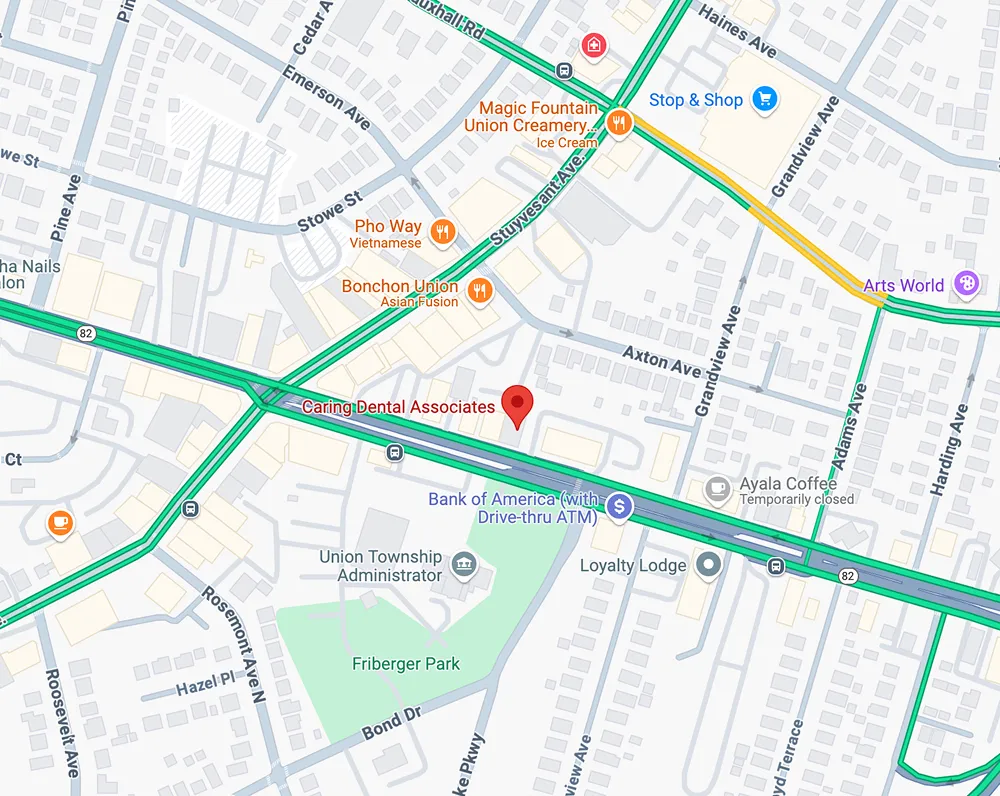
Union
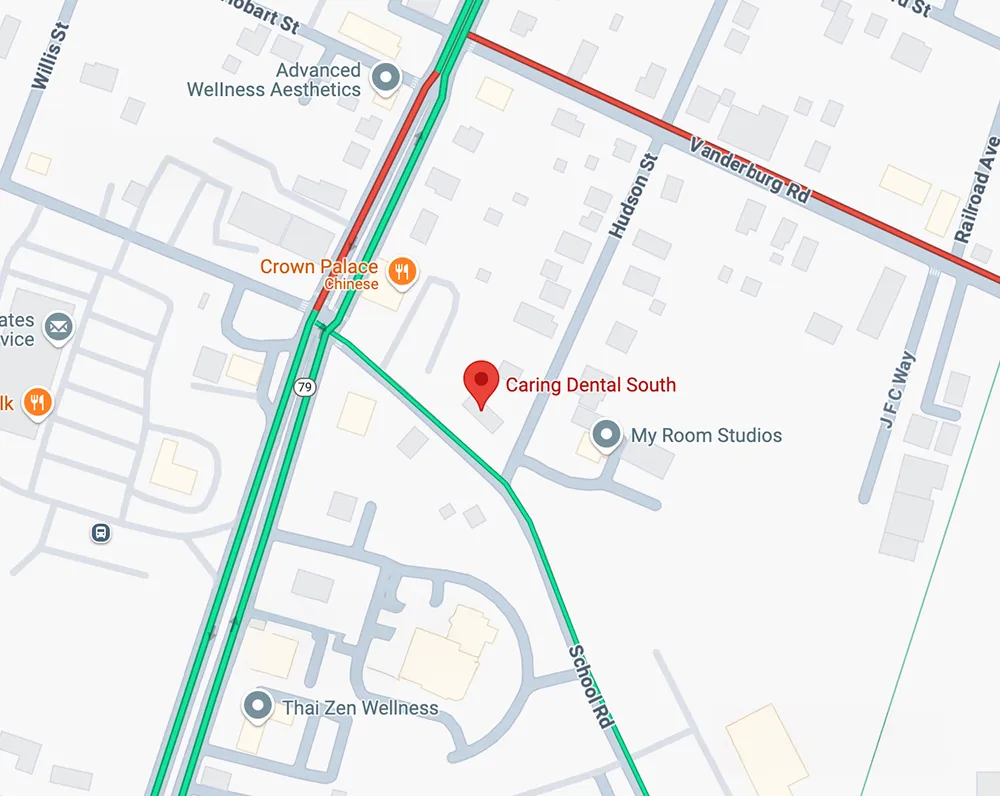
Marlboro
Union
Phone: (908) 686-0302
Office Hours
Monday: 10:00 a.m. - 7:00 p.m.
Tuesday: 10:00 a.m. - 7:00 p.m.
Wednesday: 10:00 a.m. - 7:00 p.m.
Thursday: 10:00 a.m. - 7:00 p.m.
Friday: 10:00 a.m. - 5:00 p.m.
Saturday: Closed
Sunday: Closed


Marlboro
Phone: (732) 462-5700
Office Hours
Monday: 10:00 a.m. - 7:00 p.m.
Tuesday: Closed
Wednesday: Closed
Thursday: 10:00 a.m. - 6:00 p.m.
Friday: Closed
Saturday: 10:00 a.m. - 2:00 p.m.
Sunday: Closed
Experience dental care like never before with treatments that keep your teeth stunningly healthy. Caring Dental is here to make every smile shine brighter.