

How Do Implant Supported Overdentures Work? Everything You Need to Know

If you have missing teeth or wear traditional dentures, you may have heard about implant supported overdentures. The concept can sound complicated at first, but the basic idea is fairly simple.
Instead of allowing a removable denture to rest entirely on the gums, dental implants are used as anchors. The denture attaches to those implants, giving the restoration additional stability.
For patients who have struggled with loose dentures, this can be an appealing option.
At Caring Dental Associates, we help patients understand how implant supported overdentures work, what the treatment process involves, and what they can expect after receiving their restoration.
How Do Implant Supported Overdentures Work?
Implant supported overdentures rely on two main components: dental implants and a removable denture.
The implants are placed into the jawbone. Once they have healed and integrated with the bone, attachments connect the denture to the implants.
Think of the Implants as Anchors
A traditional denture sits on the gums.
An implant supported overdenture has additional support from implants beneath the gumline.
This anchoring system helps prevent the denture from shifting as much during everyday activities.
What Are Dental Implants?
A dental implant is a small post placed into the jawbone to replace the root portion of a missing tooth.
In an overdenture treatment plan, the implants are not necessarily supporting individual crowns.
Instead, they can be positioned strategically to support the removable denture.
What Are the Attachments?
The attachment system is the connection between the implants and the overdenture.
Different systems may be used depending on the treatment plan.
Why Are Attachments Important?
The attachments allow the denture to connect securely to the implants while still being removable for cleaning.
Your dentist will explain how your specific system works and how to maintain it.
The Implant Supported Overdenture Process
Step 1: Comprehensive Evaluation
Your dentist examines your mouth, gums, remaining teeth, jawbone, and bite.
Imaging may be used to assess bone levels and determine implant positions.
Step 2: Treatment Planning
Your dentist determines how many implants are needed and where they should be placed.
Step 3: Preparatory Treatment
Some patients may need extractions, periodontal treatment, bone grafting, or other procedures before implant placement.
Step 4: Implant Placement
The implants are placed into the jawbone.
Step 5: Healing and Integration
The bone gradually integrates with the implants.
This creates a stable foundation for the attachment system.
Step 6: Overdenture Fabrication
A custom restoration is designed to fit your mouth and connect with the implants.
Step 7: Final Adjustment
Your dentist checks the fit, bite, comfort, and function.
What Does the Denture Feel Like?
An overdenture will still feel different from natural teeth.
You may notice the appliance during the first few days or weeks.
Most Patients Need an Adjustment Period
Speaking and chewing may feel unfamiliar initially.
Your mouth gradually becomes accustomed to the restoration.
The improved stability can make everyday activities feel more predictable once you have adapted.
What Happens if an Implant Does Not Integrate?
Implant integration is an important part of treatment.
In some cases, an implant may fail to integrate adequately. Your dentist can evaluate the situation and determine the appropriate next step.
Implant treatment is not risk-free, which is why careful planning and ongoing maintenance matter.
Can Implant Supported Overdentures Improve Chewing?
They can provide greater stability than traditional dentures.
When the denture moves less, many patients find chewing easier.
However, your ability to eat comfortably depends on factors such as the restoration design, bite, jaw anatomy, and adaptation.
How Do You Clean an Implant Supported Overdenture?
Daily maintenance involves both the denture and the implants.
Remove and Clean the Denture
If your restoration is removable, clean it according to your dentist's instructions.
Clean Around the Implants
Use the recommended brush, floss, or cleaning aids to keep the tissues around the implants healthy.
Keep Your Dental Appointments
Professional examinations allow your dentist to monitor the implants, attachments, and restoration.
What Happens if the Overdenture Feels Loose?
A loose feeling does not necessarily mean the implants have failed.
The attachment components can wear over time, and the denture itself may require adjustment.
Do Not Try to Repair It Yourself
Contact your dentist if the restoration suddenly becomes loose or uncomfortable.
Your dentist can determine whether an attachment, denture fit, or another issue is responsible.
How Long Does the Process Take?
The timeline varies significantly.
Some patients have relatively straightforward treatment, while others need extractions, bone grafting, periodontal treatment, or additional healing time.
Your dentist can provide a personalized timeline after evaluating your mouth.
Understand Your Implant-Supported Options
Implant supported overdentures can sound complicated when you first hear the term, but the basic concept is straightforward: implants provide an anchor, and the removable denture attaches to those implants.
Schedule a Consultation in Union, NJ
If you are considering implant supported overdentures, Caring Dental Associates can evaluate your oral health and explain how the treatment could work for you.
Contact our dental practice in Union, NJ, to schedule a consultation.
Frequently Asked Questions
How do implant supported overdentures stay in place?
They attach to dental implants placed in the jawbone using specialized attachment systems.
Are implant supported overdentures removable?
Yes. Most are designed to be removed for cleaning.
Do implant supported overdentures feel like real teeth?
They are not identical to natural teeth, but improved stability can make them feel more secure than conventional dentures.
How many implants support an overdenture?
The number varies based on the jaw, bone quality, restoration design, and treatment plan.
Can an overdenture be used on the upper jaw?
Yes. Implant supported overdentures can be designed for the upper or lower arch.
How long does implant integration take?
Healing time varies from patient to patient and depends on the implant site and individual biology.
What if I have bone loss?
Your dentist can evaluate whether enough bone is available or whether bone grafting or another preparatory treatment is needed.
Can I remove my overdenture at night?
Your dentist will provide instructions based on your restoration and oral health.
How do I clean under an implant supported overdenture?
Your dentist can demonstrate the appropriate cleaning techniques and recommend tools for your specific attachment system.
Can the attachment components wear out?
Yes. Attachment components can experience normal wear and may eventually need replacement or adjustment.
Our Location
Our office is conveniently located to offer you easy access to a wide range of dental services. Stop by today to experience exceptional service in a comfortable setting.
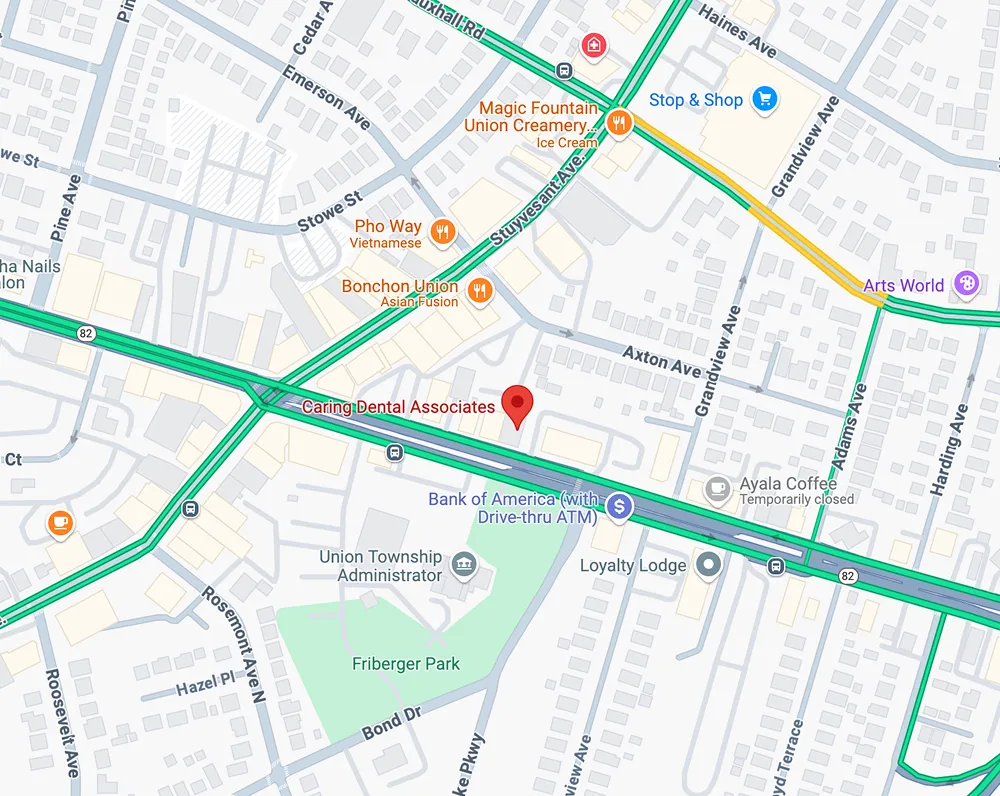
Union
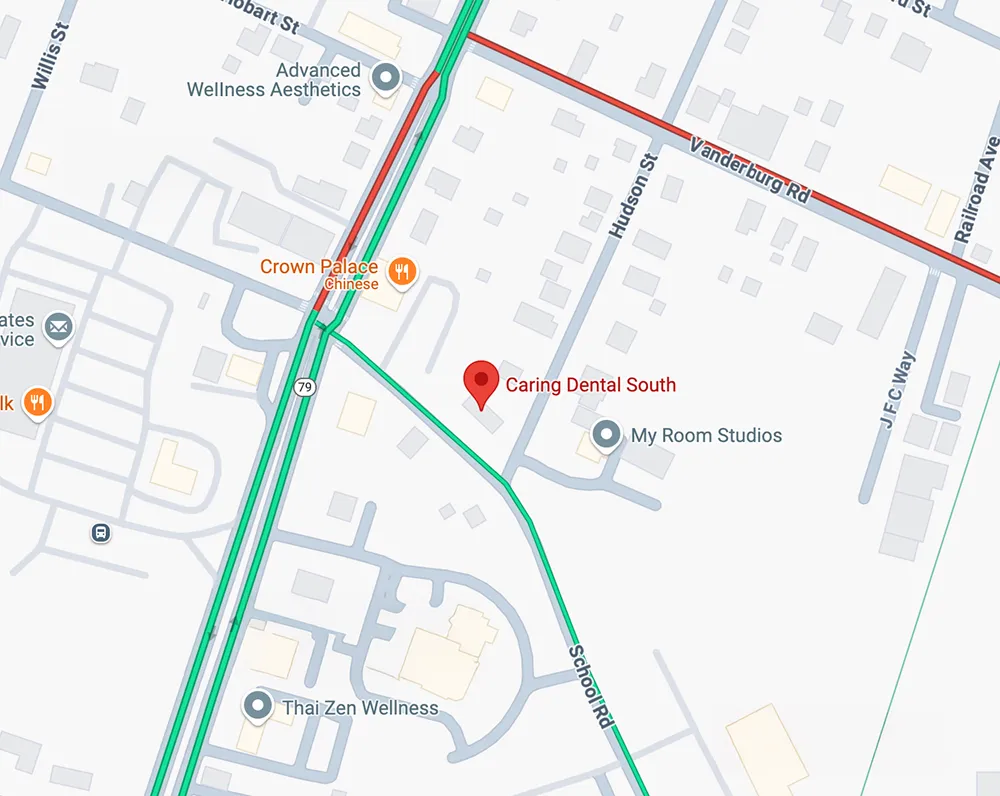
Marlboro
Union
Phone: (908) 686-0302
Office Hours
Monday: 10:00 a.m. - 7:00 p.m.
Tuesday: 10:00 a.m. - 7:00 p.m.
Wednesday: 10:00 a.m. - 7:00 p.m.
Thursday: 10:00 a.m. - 7:00 p.m.
Friday: 10:00 a.m. - 5:00 p.m.
Saturday: Closed
Sunday: Closed


Marlboro
Phone: (732) 462-5700
Office Hours
Monday: 10:00 a.m. - 7:00 p.m.
Tuesday: Closed
Wednesday: Closed
Thursday: 10:00 a.m. - 6:00 p.m.
Friday: Closed
Saturday: 10:00 a.m. - 2:00 p.m.
Sunday: Closed
Experience dental care like never before with treatments that keep your teeth stunningly healthy. Caring Dental is here to make every smile shine brighter.